Spa-Look Tempered Glass Oval Basin + Waterfall Faucet
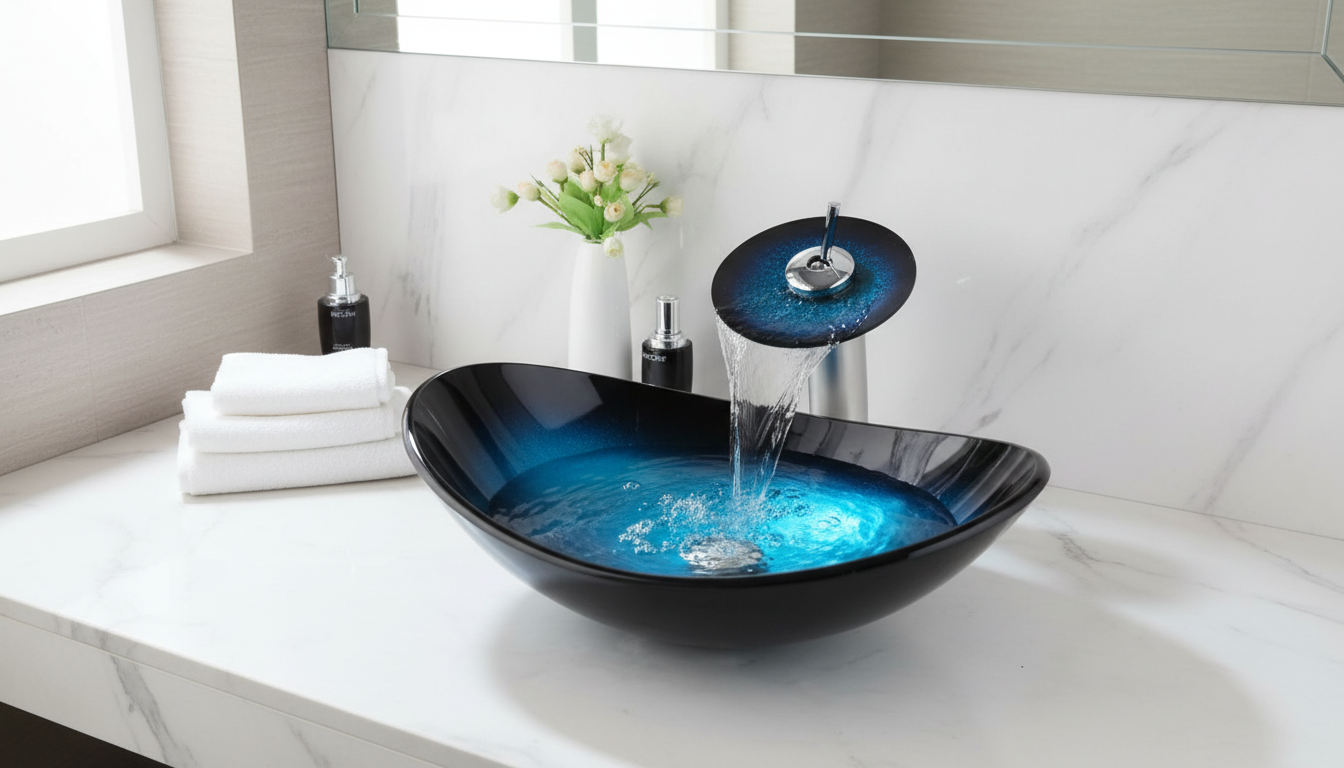
Tempered Glass Waterfall Faucet Oval Basin with Drain Pipe
A waterfall faucet paired with an oval tempered-glass basin creates a clean, spa-inspired focal point for a modern bathroom. This set is designed to deliver a smooth, sheet-like flow while keeping the countertop look light and contemporary, with a coordinated drain pipe for a more finished installation.
If you’re updating a powder room or refining a primary bath vanity, the combination of transparent or lightly tinted glass and a crisp waterfall stream can make the sink area feel brighter and more intentional—especially when the drain line looks as polished as what’s on top of the counter.
What makes this sink-and-faucet set stand out
- Waterfall-style spout: Produces a broad, even stream that looks refined and is easy to rinse hands under.
- Oval basin profile: Suits compact vanities while still offering comfortable bowl space for everyday use.
- Tempered glass construction: Provides stronger impact resistance than standard glass for typical bathroom conditions.
- Coordinated drain pipe: Helps unify the look below the basin, especially on open or floating vanities.
- Modern, hotel-inspired aesthetic: Pairs well with minimalist, contemporary, and streamlined bathroom designs.
Materials and build details to look for
Tempered glass that’s ready for real bathrooms
Tempered glass is heat-treated to improve strength compared to non-tempered glass. For a bathroom basin, that matters because daily use includes temperature swings, routine rinsing, and the occasional bump from toiletries. While glass should still be treated with care, tempered construction is designed to better handle typical household demands.
A smoother surface that’s easier to maintain
Glass basins are popular because they can look “weightless” on the counter. A practical perk is the smooth surface: regular wipe-downs help resist staining and reduce places where grime can cling. If you have hard water, the biggest difference-maker is consistency—quick drying and gentle cleaning keep the basin clearer longer.
Waterfall flow depends on a clean outlet edge
Waterfall spouts commonly use a wide outlet to create the sheet effect. Mineral buildup or debris along that edge can distort the flow into uneven streams. Keeping the outlet clean helps preserve that calm, uniform cascade.
Drain compatibility is worth a double-check
Even when a drain pipe is included, compatibility matters. Confirm that the drain components match the basin’s drain opening and align with your home’s plumbing size and vanity layout. If you’re aiming for efficient fixtures, it’s also worth reviewing guidance from EPA WaterSense on water-saving bathroom upgrades.
What’s included and what may still be needed
This type of bundle is designed to simplify the “mix-and-match” guesswork by pairing the basin and waterfall faucet as a coordinated set. A drain pipe is also included for a more complete, visually cohesive setup underneath.
Depending on your vanity and existing plumbing, common add-ons may still be required—such as shutoff valves, supply lines, plumber’s putty or silicone, and a compatible P-trap. Before ordering, verify whether your vanity top is pre-drilled and whether the faucet is intended for a single-hole configuration or needs a specific hole layout.
Quick component checklist
| Component | Purpose | Check before installation |
|---|---|---|
| Tempered glass oval basin | Holds water and defines the countertop look | Countertop cutout/fit, drain opening alignment |
| Waterfall faucet | Provides sheet-like flow into the bowl | Hole configuration, reach/spout clearance, shutoff valve access |
| Drain pipe | Routes water from the basin toward the trap | Diameter compatibility, leak-free seals at connections |
| Mounting/seal materials (may be needed) | Helps prevent shifting and water seepage | Confirm silicone/plumber’s putty type recommended for glass and countertop material |
Installation overview for a cleaner finish
- Dry-fit first: Place the basin and faucet without sealant to confirm alignment, clearance, and comfortable handwashing space.
- Seal the contact points: Use appropriate sealing where the basin meets the countertop to help prevent moisture intrusion and protect the vanity top over time.
- Connect and test the drain pipe: Assemble carefully and test for leaks with a slow fill-and-drain cycle before final tightening.
- Avoid overtightening near glass: Tighten gradually and evenly to reduce stress on the basin and hardware interfaces.
- Check splash at multiple flow rates: Run water lightly and fully on to confirm the waterfall outlet stays smooth and lands closer to the drain area.
For broader plumbing considerations—especially if you’re unsure about materials or connections—resources from NSF International’s plumbing and water information can help you understand common standards and water-quality factors that affect fixtures.
Daily care and keeping the glass clear
Choosing the right vanity and placement
Common issues and simple fixes
Shop in-stock picks
- Tempered Glass Waterfall Faucet Oval Basin with Drain Pipe
- Helping Pets Handle Vacuum Stress
- Homework Help Made Easy Toolkit for Parents – Printable Guide
FAQ
Is a tempered glass basin durable enough for everyday bathroom use?
Yes—tempered glass is heat-treated to be stronger than regular glass, making it well-suited to typical bathroom temperature changes and daily use. It’s still important to avoid sharp impacts from heavy objects, especially around edges.
How can water spots be minimized on a glass sink?
Wipe the basin dry after use and clean it regularly with non-abrasive products to prevent soap film and mineral buildup. If you have hard water, occasional gentle descaling helps, and harsh scouring pads should be avoided.
Will the included drain pipe fit standard bathroom plumbing?
It often fits common setups, but it’s best to confirm the drain diameter and that it matches your P-trap and vanity configuration. Depending on your install, you may still need compatible shutoffs and supply lines.











Leave a comment